
Why Do We Need Water?
Understanding the Importance of Hydration for the Human Body
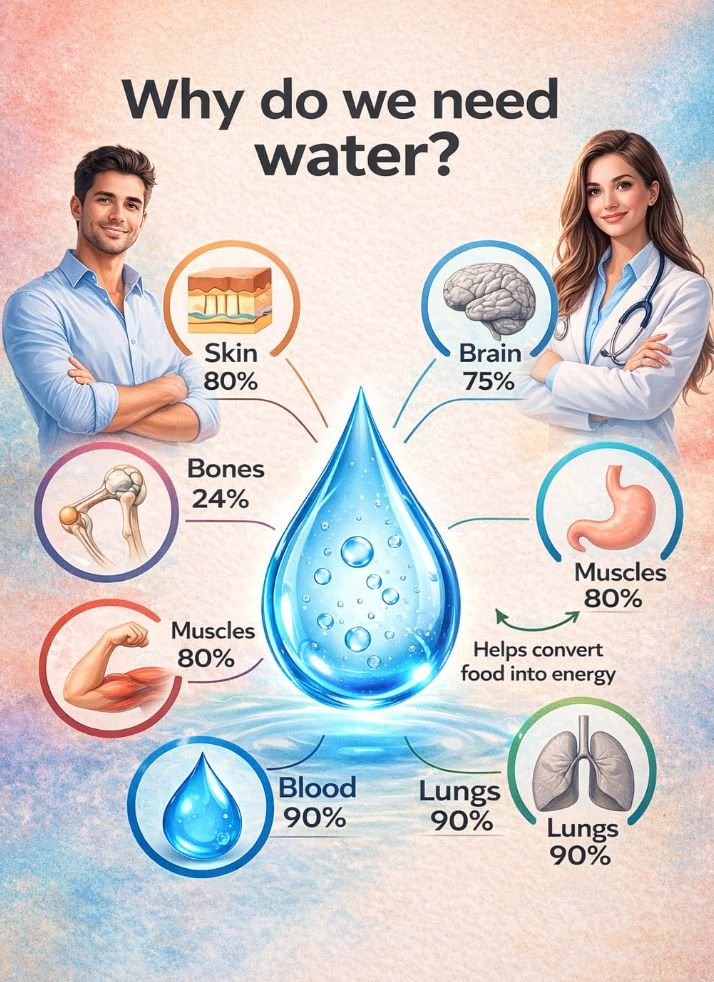
The image highlights how water is an essential component of many parts of the human body. The percentages shown are approximate and can vary depending on age, sex, tissue composition, and source.
1. 🧴 Skin — Approximately 80%
Water helps maintain the skin’s moisture, elasticity, and overall appearance. Proper hydration supports the skin barrier and helps prevent excessive dryness. Water also supports circulation and the delivery of nutrients to skin cells. However, drinking water alone cannot prevent all skin problems; nutrition, sleep, environment, and skincare also matter.
2. 🧠 Brain — Approximately 75%
The brain contains a high proportion of water, which is important for normal neurological function. Adequate hydration supports concentration, alertness, mood, and cognitive performance. Even mild dehydration may contribute to headaches, tiredness, or difficulty concentrating. Regular fluid intake helps the body maintain the environment needed for healthy brain function.
3. 🦴 Bones — Approximately 24%
Bones contain water along with minerals, proteins, and other tissues. Water contributes to the body’s overall fluid balance and supports processes involved in bone metabolism. Adequate hydration also helps maintain normal circulation and nutrient transport. Healthy bones depend on many factors, including calcium, vitamin D, exercise, hormones, and overall nutrition.
4. 💪 Muscles — Approximately 80%
Muscle tissue contains a large amount of water, making hydration important for normal muscle function. Water helps maintain blood volume, transport nutrients, regulate body temperature, and support physical performance. During exercise, fluid is lost through sweat. Replacing these fluids can help reduce dehydration-related fatigue and support normal muscle performance.
5. 🩸 Blood — Approximately 90%
Blood plasma is largely water, making hydration essential for healthy circulation. Water helps blood transport oxygen, nutrients, hormones, and waste products throughout the body. Maintaining adequate fluid levels also supports normal blood volume and circulation. Significant dehydration can reduce blood volume and may contribute to dizziness, weakness, or increased cardiovascular strain.
6. 🫁 Lungs — Approximately 80–90%
The lungs and respiratory system require adequate hydration to function normally. Water helps keep respiratory secretions appropriately moist and supports the normal movement of mucus through the airways. Dehydration can make secretions thicker and potentially harder to clear. However, lung health also depends on factors such as avoiding smoking, infections, and air pollution.
7. ⚡ Helps Convert Food Into Energy
Water participates in numerous chemical reactions involved in digestion and metabolism. It helps transport nutrients from food and supports the processes through which cells produce energy. Water itself does not provide calories or energy, but adequate hydration is necessary for many metabolic processes that allow the body to use carbohydrates, fats, and proteins.
💧 Key Message
Water is essential for life. It supports circulation, digestion, temperature regulation, metabolism, brain function, muscles, skin, and many other body processes.
💦 Stay Hydrated. Stay Healthy.
Drink water regularly and pay attention to your body’s thirst and fluid needs.
This is Good platform, valuable Information for who searching Doctors